


 24 Hour Emergency Aid
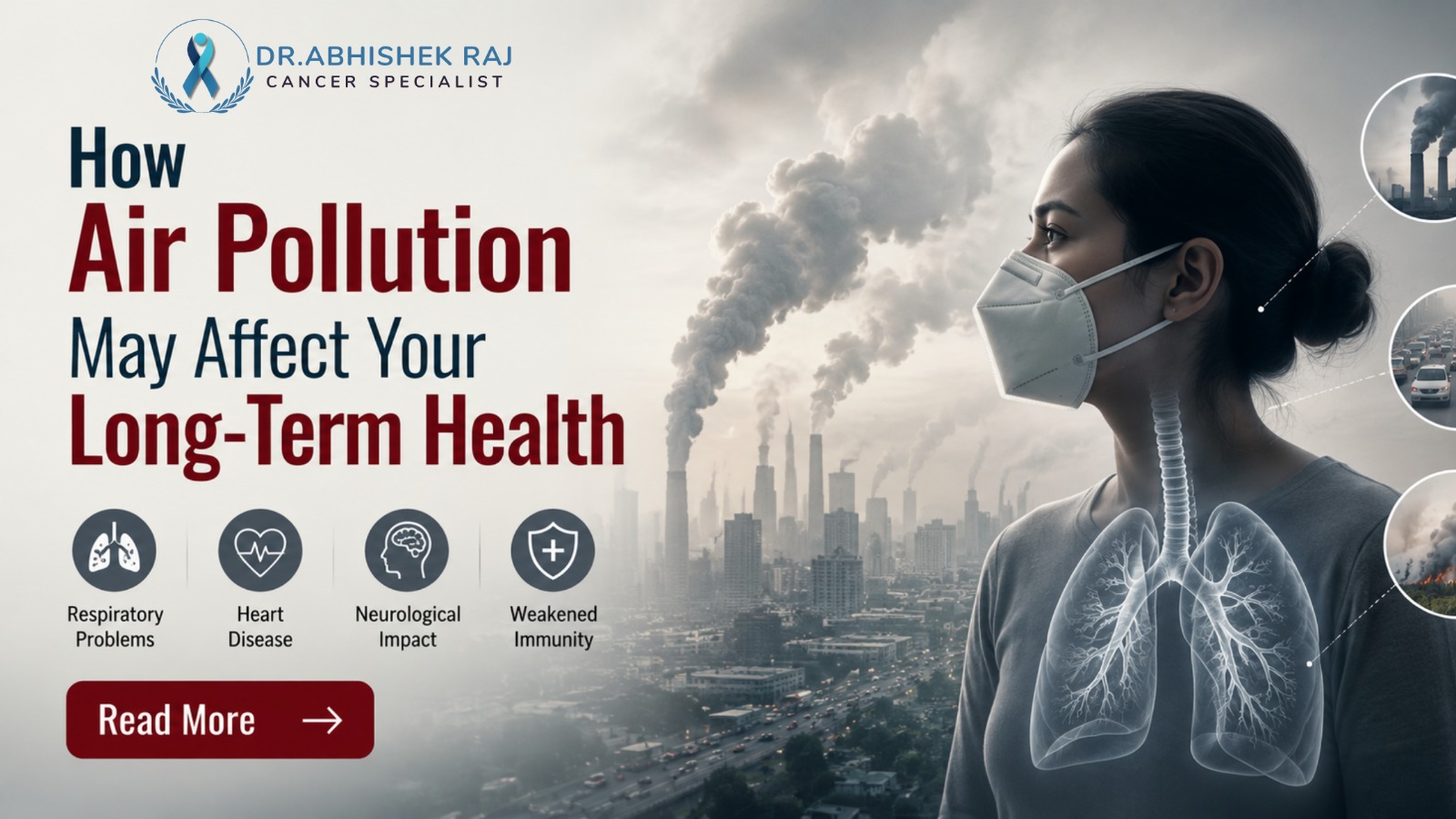
How Air Pollution May Affect Your Long-Term Health
Take a deep breath. Now think about what was actually in that breath. If you live in a city like Delhi NCR or Noida, chances are it wasn't just oxygen — it was a cocktail of dust, smoke, vehicle emissions, and microscopic particles that you can't see but your body certainly feels.
We tend to think of air pollution as a seasonal nuisance — something that makes our eyes water or gives us a scratchy throat for a few weeks in winter. But the truth is far more serious. Air pollution isn't just an annoyance; it's a slow, silent contributor to some of the most life-altering diseases we face today.
The Air We Breathe, The Damage We Don't See
Every time you inhale polluted air, tiny particles called PM2.5 and PM10 enter your lungs. These particles are so small that they can pass directly into your bloodstream, traveling to organs far beyond your respiratory system. Over months and years, this exposure builds up — and that's where long-term health problems begin.
1. Respiratory Damage That Builds Over Time
Chronic exposure to polluted air thickens and inflames the lining of your airways. This can lead to asthma, chronic obstructive pulmonary disease (COPD), and a general decline in lung function — even in people who have never smoked a cigarette in their life.
2. Heart Disease Risk Increases Quietly
Air pollution doesn't just affect your lungs — it strains your heart too. Tiny pollutant particles trigger inflammation in blood vessels, raising the risk of high blood pressure, heart attacks, and strokes. Many people don't realize that the air outside their window could be just as harmful to their heart as poor diet or lack of exercise.
3. A Growing Link to Cancer
Perhaps the most alarming long-term effect is the connection between air pollution and cancer, particularly lung cancer. The World Health Organization has classified outdoor air pollution as a known carcinogen. This is precisely why early screening matters, and why consulting the Best medical oncologist in Noida Extension. At the first sign of persistent cough, unexplained weight loss, or breathing difficulty can make a critical difference in outcomes.
If you've been exposed to high pollution levels for years and notice symptoms that don't go away, don't wait it out. Visiting the Best medical oncologist in Noida Extension.. for a proper diagnostic evaluation can help catch issues early, when treatment is most effective.
4. Weakened Immunity in Children and the Elderly
Children and elderly individuals are especially vulnerable. Developing lungs and aging immune systems struggle more to cope with pollutants, making them prone to frequent infections, slower recovery, and long-term respiratory complications.
5. Mental Health and Cognitive Effects
Emerging research suggests that long-term pollution exposure may also affect brain health, contributing to anxiety, memory issues, and even a higher risk of neurodegenerative conditions later in life. It's a reminder that clean air isn't just about physical health — it's about overall wellbeing.
Why Awareness and Early Action Matter
The unsettling part about pollution-related illness is how gradually it develops. There's no single dramatic moment — just years of accumulated exposure that eventually shows up as a diagnosis. This is why regular health check-ups are so important, especially for people living in high-pollution zones.
If your family has a history of cancer, or if you've lived in a heavily polluted area for a long time, proactive screening is wise. Seeking guidance from the Best medical oncologist in Noida Extension. isn't something to be done only when symptoms appear — it can also be part of a preventive health strategy.
Simple Steps to Protect Yourself
You can't control the air quality outside, but you can reduce your personal exposure:
Check the Air Quality Index (AQI) daily and limit outdoor activity on high-pollution days
Use N95 masks when stepping outside during smog-heavy months
Invest in indoor air purifiers, especially in bedrooms
Add air-purifying plants to your home
Avoid early morning walks during peak pollution hours
Get annual health screenings, particularly lung and cardiovascular check-ups
When to See a Specialist
If you experience persistent coughing, unexplained fatigue, breathlessness, or any unusual symptoms that last more than a few weeks, don't dismiss them as "just pollution." These could be early warning signs of something more serious. Consulting the Best medical oncologist in Noida Extension. ensures you get expert evaluation, accurate diagnosis, and a personalized care plan — because when it comes to long-term health, early detection truly saves lives.
Many patients delay seeking help, assuming symptoms will pass on their own. But specialists who understand pollution-linked illnesses — including the Best medical oncologist in Noida Extension. can identify patterns that a general check-up might miss, especially when symptoms overlap with common pollution-related complaints.
Final Thoughts
Air pollution is often treated as a temporary, seasonal problem — but its effects on your body are anything but temporary. From your lungs and heart to your long-term cancer risk, the air you breathe every day plays a far bigger role in your health than most people realize.
Protecting yourself starts with awareness, simple lifestyle changes, and not ignoring warning signs. And if something doesn't feel right, don't wait — reach out to a trusted specialist, such as the Best medical oncologist in Noida Extension. for the right guidance at the right time.
FAQs
1. Can air pollution really cause cancer?
Yes, long-term exposure to polluted air is a recognized risk factor for lung and other cancers.
2. What are early warning signs of pollution-related illness?
Persistent cough, breathlessness, fatigue, and chest discomfort are common early signs.
3. Who is most at risk from air pollution?
Children, the elderly, and people with existing heart or lung conditions face higher risk.
4. How often should I get screened if I live in a polluted city?
An annual health check-up, including lung function tests, is generally recommended.
5. When should I consult an oncologist?
If symptoms like unexplained weight loss or a persistent cough last several weeks, seek expert evaluation promptly.