

 24 Hour Emergency Aid
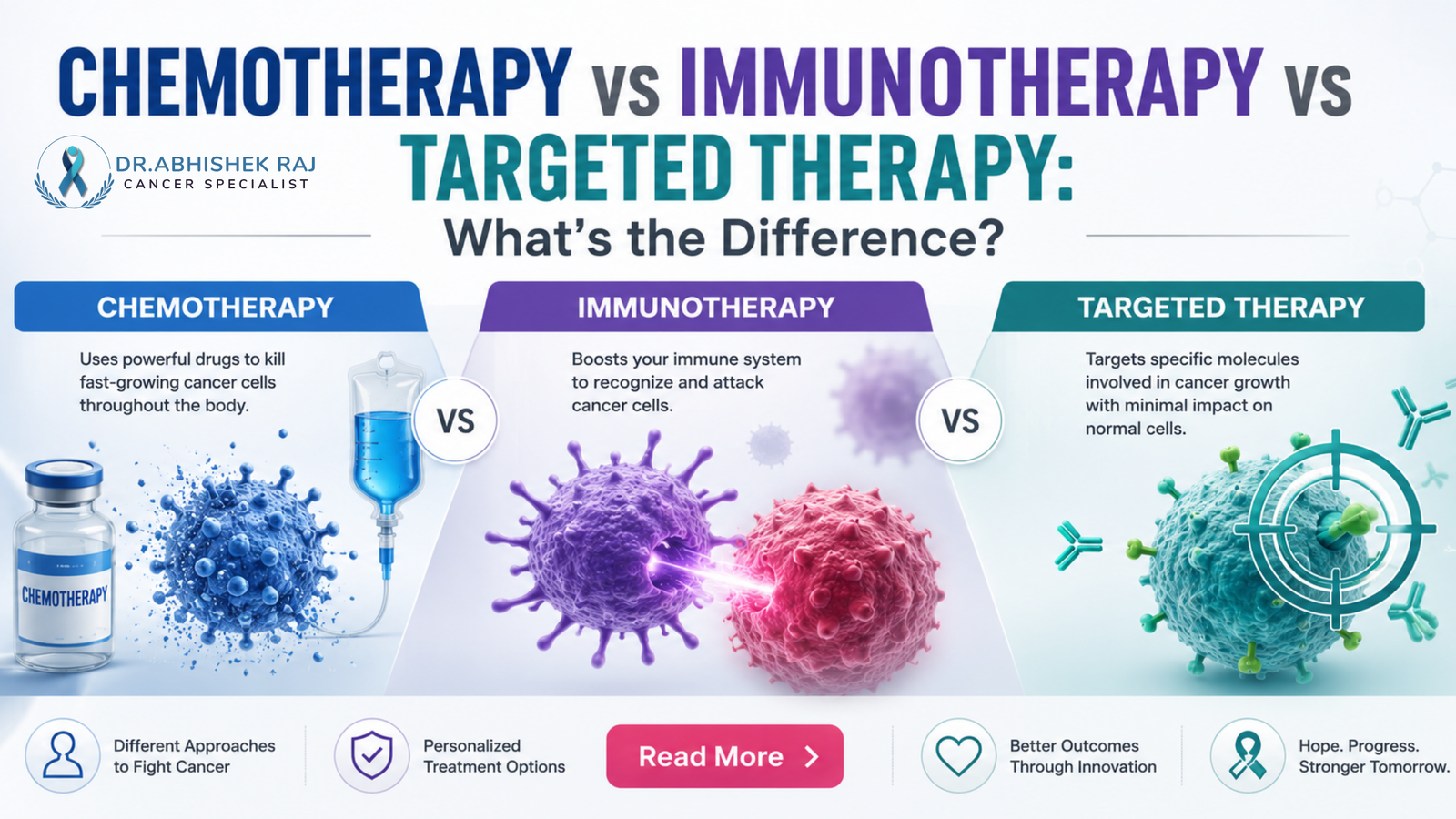
Chemotherapy vs Immunotherapy vs Targeted Therapy: What's the Difference?
A cancer diagnosis often brings a flood of new medical terms — chemotherapy, immunotherapy, targeted therapy — and it's natural to feel confused about how these treatments differ and which one is right for you. While all three aim to fight cancer, they work in very different ways, have different side effects, and are suited to different types of cancer. Understanding these differences can help you have more informed conversations with your doctor and feel more confident about your treatment journey. Consulting the best medical oncologist in Noida Extension is the first step toward figuring out which approach — or combination of approaches — is right for your specific diagnosis.
In this blog, we break down how each treatment works, their benefits, side effects, and how oncologists decide which one to recommend.
What Is Chemotherapy?
Chemotherapy is one of the oldest and most widely used cancer treatments. It uses powerful drugs designed to kill rapidly dividing cells in the body. Since cancer cells divide much faster than most normal cells, chemotherapy is effective at destroying them — but it doesn't fully distinguish between cancerous and healthy fast-dividing cells (like hair follicles, bone marrow, and digestive tract lining), which is why it often causes side effects like hair loss, fatigue, and nausea.
How It Works
Chemotherapy drugs interfere with the cancer cell's ability to grow and divide, eventually causing the cells to die. It can be given orally, intravenously, or through injections, and is often administered in cycles to allow the body time to recover between doses.
When It's Used
Chemotherapy is used across a wide range of cancers, including breast, lung, blood cancers, and many others. It can be used before surgery (to shrink tumors), after surgery (to eliminate remaining cancer cells), or as a primary treatment for cancers that have spread.
What Is Immunotherapy?
Immunotherapy takes a completely different approach — instead of directly attacking cancer cells, it boosts the body's own immune system to recognize and destroy them. Cancer cells are often skilled at "hiding" from the immune system, and immunotherapy essentially removes that camouflage.
How It Works
Certain immunotherapy drugs, known as checkpoint inhibitors, block proteins that cancer cells use to evade immune detection. Once these blocks are removed, the immune system can identify and attack the cancer more effectively. Other forms of immunotherapy include CAR-T cell therapy, where a patient's own immune cells are modified in a lab to better fight cancer.
When It's Used
Immunotherapy has shown strong results in cancers like melanoma, lung cancer, kidney cancer, and certain blood cancers such as lymphoma and leukemia. It's often considered when other treatments haven't worked as well, though it's increasingly used as a first-line option for specific cancer types.
Side Effects
Because immunotherapy activates the immune system, side effects can include inflammation in various organs, fatigue, and flu-like symptoms. These are generally different from the side effects seen with chemotherapy.
What Is Targeted Therapy?
Targeted therapy is a more precise approach that focuses on specific molecules or genetic mutations that fuel cancer growth. Unlike chemotherapy, which affects all rapidly dividing cells, targeted therapy is designed to attack only cancer cells with particular characteristics — sparing most healthy cells in the process.
How It Works
Targeted therapy drugs are designed to block specific proteins, enzymes, or genetic pathways that cancer cells rely on to grow and spread. Before starting this treatment, doctors often perform genetic or molecular testing on the tumor to identify whether it has a target that the therapy can act on.
When It's Used
Targeted therapy is commonly used for cancers with known genetic mutations, such as certain types of breast cancer (HER2-positive), lung cancer (EGFR mutations), and some blood cancers. Because it depends on the tumor's specific biology, not every patient is a candidate — testing is essential first.
Side Effects
Targeted therapy often has a different side effect profile than chemotherapy, which may include skin issues, high blood pressure, or fatigue, though it's generally considered more tolerable for many patients since it spares more healthy cells.
Key Differences at a Glance
Feature | Chemotherapy | Immunotherapy | Targeted Therapy |
Mechanism | Kills fast-dividing cells | Boosts immune response | Blocks specific cancer pathways |
Precision | Low (affects healthy cells too) | Moderate | High (requires genetic testing) |
Common Side Effects | Hair loss, nausea, fatigue | Flu-like symptoms, inflammation | Skin issues, blood pressure changes |
Best Suited For | Wide range of cancers | Cancers respondent to immune activation | Cancers with specific mutations |
Can These Treatments Be Combined?
Yes — in many cases, oncologists combine two or even all three treatment types to improve outcomes. For example, a patient might receive chemotherapy to shrink a tumor, followed by targeted therapy to control cancer with a specific mutation, or immunotherapy alongside chemotherapy to enhance the immune response while directly attacking cancer cells. The right combination depends entirely on the cancer type, stage, and the patient's overall health.
How Oncologists Decide Which Treatment Is Right for You
Choosing the right treatment isn't a one-size-fits-all decision. Oncologists consider several factors, including:
The type and stage of cancer
Genetic or molecular characteristics of the tumor
Overall health and ability to tolerate treatment
Previous treatments and their response
Latest clinical evidence and treatment guidelines
This is why a thorough diagnostic workup — including biopsies, imaging, and sometimes genetic testing — is so important before starting any treatment. Working with the best medical oncologist in Noida Extension ensures that these decisions are made with precision, backed by both clinical expertise and access to advanced diagnostic tools.
Why Expert Guidance Matters
Since these treatments differ so significantly in mechanism, side effects, and suitability, self-research alone isn't enough to determine the right path forward. Every cancer is unique, and even two patients with the same type of cancer may need very different treatment plans based on their tumor's specific characteristics.
An experienced oncologist doesn't just prescribe treatment — they walk you through why a particular approach is recommended, what side effects to expect, and how to manage them. This kind of personalized, transparent care is what separates a good treatment outcome from a truly supported patient journey. If you're navigating a new diagnosis or seeking a second opinion, consulting the best medical oncologist in Noida Extension can help clarify your options and build a treatment plan tailored specifically to you.
Final Thoughts
Chemotherapy, immunotherapy, and targeted therapy each play a unique and valuable role in modern cancer care. None is universally "better" — the right choice depends on your specific cancer type, genetic profile, and overall health. As oncology continues to advance, many patients now benefit from a combination of these approaches, offering more effective and personalized treatment than ever before.
If you or a loved one has been diagnosed with cancer, don't navigate these decisions alone. A detailed consultation with the best medical oncologist in Noida Extension can help you understand your diagnosis clearly and choose the treatment path best suited to your needs.
Frequently Asked Questions (FAQs)
1. Which is better — chemotherapy or immunotherapy? Neither is universally better; the right choice depends on the cancer type, its genetic profile, and how it responds to each treatment approach.
2. Does targeted therapy work for all cancer patients? No. Targeted therapy only works if the tumor has a specific genetic mutation or marker, which is why genetic testing is done before starting treatment.
3. Are the side effects of immunotherapy less severe than chemotherapy? Not necessarily — they are different in nature. Immunotherapy can cause immune-related inflammation, while chemotherapy commonly causes hair loss, nausea, and fatigue.
4. Can chemotherapy and immunotherapy be given together? Yes, combining chemotherapy with immunotherapy is common in certain cancers to attack cancer cells directly while boosting the immune response.
5. How do doctors decide which treatment to recommend? Oncologists consider the cancer type and stage, genetic tumor markers, overall patient health, and current clinical guidelines before recommending a treatment plan.